
When coaches and equipment managers evaluate football helmet covers, much of the conversation understandably focuses on performance.
How has the product been tested? How does it manage impact forces? How durable is it? Can athletes wear it during games?
But there’s another factor that deserves just as much attention: Fit.
Football helmets aren’t one-size-fits-all. They vary by manufacturer, model, shell geometry, and size. So why should the supplemental protection placed over them be one-size-fits-all?
At SAFR Sports, we believe a helmet cover should be engineered around the helmet it’s protecting. That’s why SAFR Helmet Covers are manufactured for specific helmet models and sizes rather than relying on a universal-fit approach.
For coaches, athletic directors, equipment managers, and parents evaluating soft-shell helmet covers, understanding why fit matters can help you make a more informed decision.
Start with the helmet itself.
A properly fitted football helmet is fundamental to player safety. Coaches and equipment managers wouldn’t knowingly put an athlete in a helmet that was dramatically too large or too small.
Supplemental helmet protection deserves similar attention.
A football helmet cover has to work with the equipment underneath it. The shape of the shell, location of hardware, overall dimensions, and helmet model all influence how a cover sits and performs.
A properly sized SAFR Helmet Cover is designed to conform closely to the specific helmet while maintaining the characteristics that allow SAFR’s impact-management technology to work as intended.
The goal isn’t simply to cover the helmet. It’s to complement it.
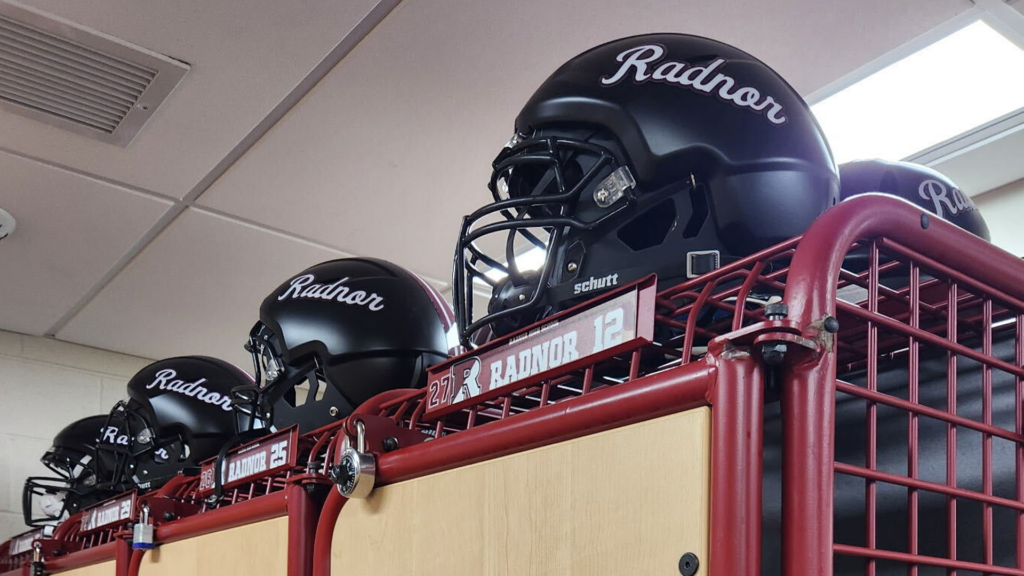
Walk through a football locker room and you’ll rarely find every athlete wearing the exact same helmet.
One player may wear a Riddell SpeedFlex.
Another may wear a Schutt F7.
And even two athletes wearing the same model may require completely different helmet sizes.
Each helmet has its own geometry.
SAFR Helmet Covers are therefore size- and model-specific and are available for many of the most popular football helmets from leading manufacturers.
That means when a program orders SAFR Helmet Covers, the goal is to match the cover to the actual helmet inventory instead of stretching one universal cover across substantially different shells.
This creates a more streamlined fit while helping the cover stay properly positioned as athletes practice and compete.
This is where understanding SAFR’s design becomes particularly important.
At first glance, it might seem logical that the best helmet cover would be one that cannot move at all.
But SAFR’s technology is designed differently.
The SAFR Helmet Cover uses a dynamic attachment system that allows controlled movement over the helmet during an impact.
That slight movement is intentional.
The soft polyurethane outer shell helps absorb and dissipate impact energy, while the attachment system allows the cover to move across the helmet to help guide force away from the player’s head.
Think of the difference between something that simply takes a hit head-on and a system designed to absorb, delay, and redirect some of that energy.
SAFR’s design isn’t about locking another rigid layer onto an already rigid helmet, it’s about managing the impact.
This is where proper sizing becomes especially important.
The cover needs enough controlled movement for its dynamic attachment system to function as designed, but it also needs to conform appropriately to the helmet underneath it.
Too loose and a helmet cover may shift excessively or become more difficult to keep properly positioned.
Too tight or improperly matched to the helmet geometry and it may not interact with the helmet as intended.
Proper fit creates the balance between secure attachment and controlled movement.
That distinction becomes increasingly important during harder football impacts, when equipment needs to remain properly positioned while athletes continue playing.
Football equipment isn’t tested by standing still.
It has to perform through tackling, blocking, contact at the line of scrimmage, piles, falls, and repeated impacts throughout practices and games.
For coaches considering supplemental helmet protection, retention should therefore be part of the evaluation. Ask:
SAFR Helmet Covers attach using their fasteners and the helmet’s existing natural snaps without requiring additional hardware.
When the correct cover is paired with the correct helmet, the result is a streamlined system designed to stay integrated with the athlete’s equipment while still allowing the controlled movement that is part of SAFR’s force-management design.
This is an important consideration when comparing soft-shell football helmet covers.
A universal product may technically stretch over several different helmets.
But “it goes on the helmet” and “it was designed for this helmet” are not necessarily the same standard.
Coaches and equipment managers should ask manufacturers specifically how their sizing works:
Is the cover universal?
Is sizing based only on small, medium, or large?
Or is the cover designed around both helmet model and helmet size?
This isn’t simply an aesthetic consideration.
It’s an equipment-design question.
When you’re adding supplemental protection to a piece of equipment as important as a football helmet, understanding exactly how the two pieces are designed to work together should be part of your evaluation.
For an individual athlete, ordering starts with identifying two pieces of information:
1. Helmet manufacturer and model
2. Helmet size
For team orders, the process requires looking at the program’s helmet inventory.
A team of 50 athletes should not automatically assume it needs 50 identical covers.
Instead, equipment managers should determine how many athletes are wearing each helmet model and size.
For example, your inventory might include a combination of:
with multiple sizes represented across the roster.
Once you know what is actually in your equipment room, SAFR can help match the appropriate covers to your inventory.
Coach Tip: Before requesting a team quote, create a simple helmet inventory organized by manufacturer, model, and size. This makes determining the correct SAFR Helmet Covers for your roster much easier.
One of the easiest mistakes a program can make is estimating what its athletes probably wear.
Helmet inventory can vary considerably based on athlete position, age, head size, equipment purchasing cycles, and the helmet models a program has accumulated over multiple seasons.
Before ordering:
A few minutes spent organizing your equipment room can prevent sizing issues when your covers arrive.
There is another side of proper sizing that shouldn’t be overlooked: player adoption.
Athletes notice equipment that feels cumbersome, they notice equipment that moves where it shouldn’t and they notice anything that dramatically changes the look and feel of their uniform.
A model-specific, helmet-conforming cover creates a more streamlined profile and integrates more naturally into the athlete’s existing equipment.
That becomes particularly valuable for programs that want athletes to wear their soft-shell helmet covers during both practices and games.
The less supplemental protection feels like an awkward add-on, the easier it becomes to make it part of the team’s normal equipment routine.
At SAFR Sports, our philosophy has always been Safer Through Science.
That philosophy extends beyond the material used to manufacture a helmet cover.
It includes how the cover absorbs and dissipates impact energy, how it moves over the helmet, how it attaches, and how it fits the specific helmet underneath it.
SAFR Helmet Covers are manufactured by helmet model and size because we believe supplemental protection should be designed around the equipment athletes actually wear.
Before outfitting your program, take inventory.
Know your helmets and know your sizes, and choose a helmet cover designed to fit both.
Because when it comes to football safety equipment, fit isn’t an afterthought, it’s part of the design.
No. SAFR Helmet Covers are model and size-specific. The appropriate cover depends on the football helmet an athlete wears and its size.
Football helmets vary in size, shape, shell geometry, and design. Matching the cover to the helmet model and size allows for a more streamlined, helmet-conforming fit and helps the cover interact with the helmet as designed.
You should know the helmet manufacturer, model, and size. For team orders, create an inventory showing the quantity of each model-and-size combination across your roster.
SAFR uses a dynamic attachment system designed to allow controlled movement over the helmet during an impact. The cover’s soft outer shell helps absorb and dissipate impact energy while the attachment system allows movement intended to help guide force away from the head.
SAFR currently estimates its helmet covers can last approximately three to four years, depending on use and condition. Programs should routinely inspect all protective equipment and follow manufacturer guidance.
Yes. SAFR Helmet Covers are designed around specific helmet models and sizes. Programs should verify their athletes’ actual helmets rather than estimating sizes before ordering.
Yes. Programs can inventory their helmet models and sizes and work with SAFR when requesting a team quote to determine the appropriate mix of covers.