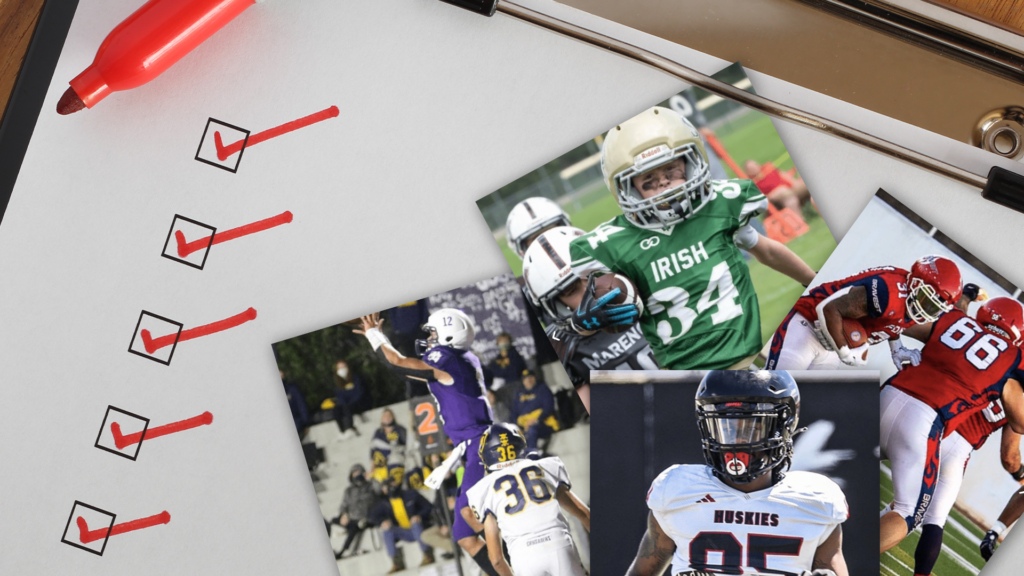
Everything You Need to Prepare for a Safer Football Season
As football season approaches, coaches are finalizing rosters, athletic directors are checking equipment, and parents are making sure their athletes are ready for the first whistle.
But one of the most important preseason preparations often happens before the first practice ever begins: creating a comprehensive football safety plan.
Today’s game is safer than it has ever been thanks to advances in coaching techniques, concussion protocols, equipment technology, and athlete education. Preparing for the season means looking at player safety from every angle—not just one.
Whether you’re a head coach, athletic director, athletic trainer, or parent, this football season safety checklist can help ensure your team is ready for kickoff.
1. Inspect Every Football Helmet
A helmet is only effective if it’s properly maintained and fitted.
Before preseason practices begin:
✔ Inspect helmets for cracks or damage
✔ Verify NOCSAE certification requirements
✔ Replace worn chin straps and hardware
✔ Confirm every helmet fits correctly
✔ Recondition helmets when required
A properly fitted helmet remains the foundation of football safety.
2. Evaluate Supplemental Helmet Protection
As more states introduce soft-shell helmet cover legislation, schools across the country are evaluating supplemental protective equipment as part of their football safety strategy.
While no helmet cover can eliminate the risk of concussion, many programs are adding soft-shell helmet covers to help reduce repetitive head impacts during practices and games.
When evaluating a helmet cover, ask:
- Has it undergone independent laboratory testing?
- Is there published field data?
- Is it durable enough for an entire season?
- Will it fit your existing helmets?
- Does the manufacturer provide education and support?
The goal isn’t simply adding another piece of equipment—it’s making informed decisions backed by science.
Learn more about SAFR Helmet Covers and independent testing.
3. Review Concussion Protocols
Every coach should understand:
- Recognition of concussion symptoms
- Immediate removal-from-play procedures
- Return-to-play requirements
- Communication with parents
- Medical documentation
Everyone on the sideline should know the plan before the season begins.
4. Teach Proper Contact Techniques
Player safety begins long before game day. Schedule dedicated time during preseason to reinforce:
- Heads-up tackling
- Blocking fundamentals
- Body positioning
- Safe practice drills
Technique remains one of the most effective tools for reducing unnecessary head impacts.
5. Educate Parents Before Week One
Parents have more questions than ever before. Host a preseason meeting covering:
- Practice expectations
- Concussion education
- Equipment overview
- Emergency procedures
- Communication protocols
Transparency builds trust.
6. Prepare Athletic Trainers and Medical Staff
Review:
- Emergency Action Plans
- Heat illness protocols
- Concussion evaluation procedures
- Emergency contact information
- Sideline communication
Preparation saves valuable time when every second matters.
7. Check Practice Equipment
Inspect:
- Blocking sleds
- Tackling dummies
- Practice helmets
- Shoulder pads
- Field conditions
- Goalposts
- Hydration stations
Small maintenance issues become major problems during the season.
8. Develop a Heat Safety Plan
Many preseason practices occur during the hottest weeks of the year. Review:
- Wet bulb temperature guidelines
- Hydration schedules
- Cooling stations
- Practice modifications
- Emergency response procedures
Heat safety is player safety.
9. Review Football Safety Legislation
Several states—including Rhode Island, Pennsylvania, West Virginia, and California—have recently introduced legislation related to soft-shell helmet covers and football safety.
Even if your state hasn’t proposed legislation yet, understanding these developments can help your program prepare for future requirements.
Stay informed so your school isn’t caught off guard.
10. Build a Culture of Safety
The safest football programs don’t rely on one product. They build a culture. A culture where:
- Players speak up.
- Coaches teach proper technique.
- Parents stay informed.
- Athletic trainers are empowered.
- Equipment is maintained.
- Safety evolves alongside the game.
That’s how football continues moving forward.
Final Thoughts
No single piece of equipment can eliminate concussion risk.
Football safety is built through multiple layers working together.
From proper coaching and medical oversight to quality equipment and supplemental helmet protection, every decision contributes to creating a safer experience for student-athletes.
As your program prepares for the upcoming season, take time to review your safety plan, evaluate your equipment, and ensure every athlete has the resources they need to compete with confidence.
The future of football depends on our commitment to continually improving player safety—one practice, one player, and one season at a time.
Frequently Asked Questions
What should every football coach do before the season starts?
Inspect equipment, review concussion protocols, educate parents, reinforce proper tackling techniques, inspect helmets, and evaluate supplemental protective equipment such as soft-shell helmet covers.
Are soft-shell helmet covers required?
Requirements vary by state. Several states have introduced legislation related to soft-shell helmet covers, while others are evaluating similar proposals.
Do soft-shell helmet covers prevent concussions?
No. No helmet or helmet cover can eliminate concussion risk. They are intended to help reduce head impact forces as one component of a comprehensive football safety strategy.
Where can I learn more about SAFR Helmet Covers?
Visit our Shop to explore SAFR Helmet Covers, review independent testing, and learn how programs across the country are incorporating supplemental helmet protection into their player safety plans.